Budget Travel Tips for Bali: Smart Ways to Save
Bali is a world-class destination that doesn't require a five-star budget. Thousands of travelers prove every year that you can experience this magical island—from ancient temples to stunning beaches, vibrant culture to incredible food—without breaking the bank. The secret isn't about missing out on experiences; it's about traveling like the locals do and making strategic choices about where to spend your money.
Whether you're a backpacker stretching every rupiah or a budget-conscious traveler who wants better value, Bali rewards those who venture beyond the main tourist strips. You'll find that a modest daily budget of $40-60 USD is not just possible but comfortable if you know where to look and how to navigate the island smartly. Let's dig into the practical strategies that will help you maximize your Bali experience while keeping costs low.
Accommodation: Where Budget Travelers Stay
Your accommodation likely consumes the largest portion of your daily budget, so choosing wisely here has a massive ripple effect on your overall spending.
Guesthouses and Homestays are your best value, with prices starting at 80,000-150,000 IDR ($5-10 USD) per night in quieter areas. These aren't fancy, but they're clean, welcoming, and often run by families who'll give you genuine local insights. We recommend looking for places offering complimentary breakfast—this alone saves you 15,000-25,000 IDR daily.
Hostels with dormitory beds are the absolute cheapest option at 50,000-100,000 IDR ($3-7 USD) per night and offer the bonus of meeting other travelers. Popular budget hostel areas include Kuta, Canggu, and Ubud.
Location matters enormously for price. Here's how accommodation varies across Bali:
| Location | Budget Range | Best For | Vibe |
|---|---|---|---|
| Ubud | 100,000-200,000 IDR | Culture, rice paddies, walkability | Artsy, quiet |
| Kuta | 150,000-300,000 IDR | Beach access, nightlife, transport | Tourist-friendly |
| Canggu | 200,000-400,000 IDR | Beaches, restaurants, young crowd | Trendy, pricier |
| Sanur | 120,000-250,000 IDR | Beaches, less touristy | Relaxed, local |
| Amed | 80,000-150,000 IDR | Snorkeling, peace, isolation | Quiet, remote |
| Lovina | 100,000-180,000 IDR | Dolphin tours, north coast | Sleepy, authentic |
| Sidemen | 100,000-170,000 IDR | Weaving villages, nature, quiet | Hidden gem |
Pro tips for accommodation deals:
- Book directly with guesthouses rather than through Booking.com or Agoda—you'll often negotiate 10-20% discounts
- Stay weekly or monthly for significant discounts (often 30-40% off nightly rates)
- Visit during shoulder season (April-May, September-November) when prices drop considerably
- Walk neighborhoods you like and inquire at several places—some unlisted rooms go for better rates
- Check Facebook groups for Bali expats and travelers posting available rooms
- Avoid tourist zones like Nusa Dua and luxury areas—you're paying for branding, not value
Eating Like a Local: The Food Budget Hack
Bali's food scene is perhaps your greatest budget advantage. You can eat incredibly well for next to nothing by choosing where locals eat rather than where tourists gather.
A typical warung meal costs 30,000-50,000 IDR ($2-3 USD) and includes rice, protein, and vegetables. Dishes like Nasi Goreng, Babi Guling, Gado-Gado, Nasi Campur, and Mie Goreng are local staples that fill you up completely. Street food pushcarts serve Pisang Goreng (fried bananas), satay, and spring rolls for 10,000-20,000 IDR.
A simple breakfast of toast, fried egg, and Kopi Bali runs just 20,000-35,000 IDR. That same meal at a café catering to tourists might cost 80,000-120,000 IDR—exactly the same food, different audience.
Where and how to eat cheaply:
- Warungs (small local restaurants) in neighborhoods away from tourism hotspots offer the best prices and authentic food
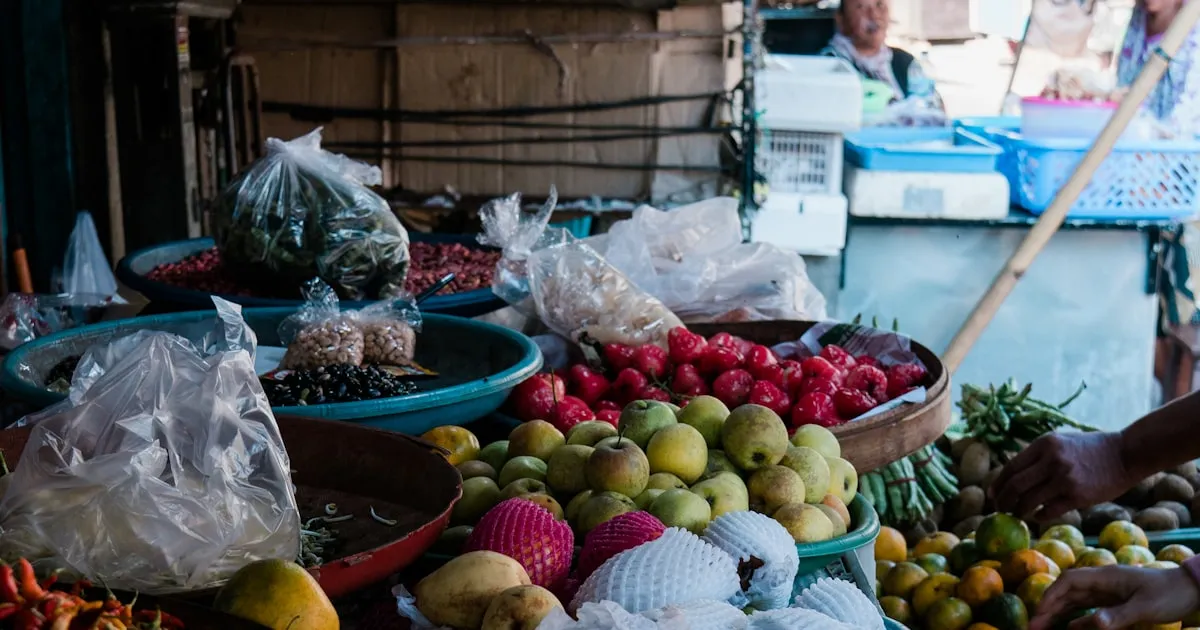
- Markets like Ubud Market have prepared food stalls where you can eat fresh for pennies
- Convenience stores (Indomaret, Alfamart) sell cheap drinks, snacks, and basic groceries
- Night markets (pasar malam) appear regularly in towns and offer incredible street food variety
- Eat where you see locals lined up—this is the golden rule of cheap eating anywhere
- Bring your own water bottle and refill at guesthouses rather than buying bottled water constantly (saves 5,000-10,000 IDR daily)
Realistic daily food budget breakdown:
| Meal | Budget Option | Cost |
|---|---|---|
| Breakfast | Toast, egg, coffee | 25,000 IDR |
| Lunch | Nasi Goreng, side | 40,000 IDR |
| Dinner | Warung meal with rice | 45,000 IDR |
| Snacks/drinks | Market fruit, coffee | 20,000 IDR |
| Daily Total | 130,000 IDR ($8-9) |
If you eat at even mid-range tourist restaurants for all meals, you'll easily spend 200,000-300,000 IDR daily. The difference is stark, and the local food is genuinely better.
Transportation: Getting Around for Less
Bali's transportation options range from incredibly cheap to tourist-trap expensive—knowing the difference saves you significantly.
Scooter rental is the budget traveler's secret weapon. A scooter costs 50,000-100,000 IDR daily ($3-7 USD), and you have complete freedom to explore at your own pace. If you're comfortable riding (watch some YouTube tutorials if needed), this gives you independence that tour operators can't match. Fuel costs about 30,000 IDR to fill a typical tank.
Public bemos (shared minivans) are the cheapest transport option at 20,000-50,000 IDR for most journeys. They're slower and less comfortable than private transport, but you'll meet locals and see real Bali. They run set routes and stop frequently, so you need flexibility.
Grab and Gojek apps (Southeast Asia's Uber equivalents) cost 50,000-150,000 IDR for most rides, much cheaper than metered taxis. These are reliable and safe—always use apps rather than negotiating with unofficial taxis.
Avoid these transportation money traps:
- Tourist shuttle buses (double the cost of regular transport)
- Airport pickups through hotels (pay 3-4x regular Grab prices)
- Official taxis from the airport (negotiate hard or use Grab instead)
- Rental cars with drivers for single trips (use Grab; hire drivers only for all-day tours)
Planning multi-day exploration? Rent a scooter and split accommodation/fuel costs with a travel friend—you'll see more of Bali cheaply.
Activities and Attractions: Experiences on a Budget
This is where budget travel gets creative. Bali has incredible experiences at every price point.
Free and nearly-free activities:
- Beach days (completely free)
- Temple visits (5,000-25,000 IDR donation suggested)
- Walking through rice paddies in Ubud
- Exploring Denpasar city (free, authentic, rarely touristy)
- Market visits and people-watching
- Sunrise watching at popular spots
- Swimming in waterfalls
Budget-friendly activities (50,000-150,000 IDR):
- Yoga classes at local studios
- Scooter self-guided tours to remote temples
- Swimming and snorkeling at beaches
- Visiting coffee plantations
- Exploring villages like Sidemen
Mid-range activities (200,000-400,000 IDR):
- Island day trips to Nusa Lembongan or Gili Islands
- Guided temple tours
- Rice terrace hiking and cycling
- Basic cooking classes
- Dolphin watching in Lovina
- Waterfall trips with guides
Key strategy: Book tours directly through your accommodation or with local guides, not through tourist agencies or online platforms. You'll save 30-40% and directly support local people.
Temple etiquette note: Most temples ask for donations (10,000-25,000 IDR), but this isn't a fixed entry fee. Pay what feels fair based on the experience. Some major temples charge 30,000-50,000 IDR officially.
Timing Your Trip: When to Go Budget
When you visit Bali dramatically impacts your costs.
Peak season (July-August, December-January): Prices are at their highest for accommodation (up 50-100%) and flights. Expect crowds everywhere. Only visit during this period if you have no choice, as your budget will stretch half as far.
Shoulder season (April-May, September-October, early November): This is when experienced budget travelers visit. Prices drop 20-30%, weather is generally good, and attractions aren't overwhelmingly crowded. April-May and September-October offer the best value combination of price and weather.
Wet season (December-March excluding holidays): Cheapest prices of the year, but expect afternoon rain, higher humidity, and occasional flight disruptions. January and February are very wet. If you don't mind occasional rain and enjoy empty beaches and accommodations, this saves you money.
Best budget month: We recommend April, May, September, or October for the optimal combination of lower prices and decent weather.
Money: Banking and Currency
Smart money management prevents unnecessary losses to fees and bad exchange rates.
Getting cash:
- Use ATMs in Bali to withdraw IDR directly—you'll get better rates than exchanging at home
- Expect ATM fees of 20,000-50,000 IDR per withdrawal; withdraw larger amounts less frequently
- BNI, Mandiri, and BCA ATMs are widespread and reliable
- Major banks like HSBC and Citibank have no ATM fees if that applies to you
Currency and budgeting:
- 1 USD ≈ 15,000-16,500 IDR (rates fluctuate, check current rates)
- Keep some small denominations (50,000 IDR notes) for small purchases
- Bargain at markets—prices often drop 20-30% with negotiation
- Most locals appreciate IDR cash; credit cards incur 3-5% surcharges at many places
Money-saving strategies:
- Avoid currency exchange booths (poor rates)
- Don't exchange money at the airport
- Use ATMs in urban areas where competition keeps fees reasonable
- Pay directly with cards only at established hotels/restaurants
- Keep receipts for larger expenses in case of disputes
Practical Daily Budget Breakdown
Here's a realistic breakdown of daily spending as a budget traveler in Bali:
| Category | Daily Cost | Notes |
|---|---|---|
| Accommodation | 100,000 IDR ($6-7) | Guesthouse or hostel dorm |
| Food | 130,000 IDR ($8-9) | Eating at warungs, local food |
| Transport | 50,000 IDR ($3-4) | Scooter rental, some Grab rides |
| Activities | 50,000 IDR ($3-4) | Mix of free and paid attractions |
| Coffee/snacks | 20,000 IDR ($1-2) | Local kopi and street snacks |
| Daily Total | 350,000 IDR ($22-27) | Very budget-conscious travel |
Realistic comfortable budget: Most travelers report spending 500,000-700,000 IDR daily ($33-47 USD), which allows for better accommodation (200,000-250,000 IDR), nicer meals occasionally (80,000-100,000 IDR), and paid activities without constant restriction.
Moderate budget: 800,000-1,000,000 IDR daily ($53-67 USD) lets you stay in decent mid-range guesthouses, enjoy restaurants freely, book organized tours, and travel very comfortably.
Special Money-Saving Hacks
Work and travel: Many budget travelers work remotely or take volunteer positions (teaching English, hostel work, yoga instruction) that provide free accommodation and small stipends. Websites like Workaway and HelpX list these opportunities.
Travel with others: Share accommodation, rent a scooter as a pair, and split tour costs. Two people on a scooter costs 25,000 IDR each for fuel instead of 50,000 IDR per person on Grab.
Long-term discounts: Stay a month or longer and negotiate monthly rates—30-40% discounts are common.
Happy hour and deals: Many bars and restaurants offer discounted drinks and food during specific hours. Local expat websites list current deals.
Shopping smart: Buy gifts and souvenirs at night markets and directly from producers rather than tourist shops. You'll pay 50% less.
Important Things to Know
Visa regulations: Most tourists enter on a 30-day tourist visa, extendable for another 30 days (60 total). If staying longer, you must exit and re-enter—many go to Malaysia or Timor Leste briefly. Never overstay; fines are steep (approximately 1 million IDR per day). Learn about the 6-month rule in Bali in our FAQ.
Travel insurance: Budget $10-20 USD for travel insurance covering accidents and illness. This is non-negotiable—medical emergencies are expensive even in Bali.
Scams and safety: Bali is generally safe, but tourist areas have common scams: inflated taxi fares, fake police, overpriced drinks, and counterfeit goods. Use Grab for rides, don't accept unmarked taxis, and compare prices before committing.
Respect and culture: Bali is Hindu-majority with sacred traditions. Wear sarongs at temples, never point at people, don't touch people's heads, and be respectful during ceremonies. Bali isn't a party destination despite its reputation—respect the culture that hosts you.
Final Tips for Budget Success in Bali
Start your research with other travelers: Join Facebook groups like "Bali Budget Travelers" or "Backpacking Bali" to learn current prices and recommendations—what cost 50,000 IDR last year might cost 60,000 now.
Build buffer days into your itinerary: Unplanned days in one location are often cheaper than rushing through multiple areas, and you'll find hidden spots other travelers miss.
Stay slightly longer in fewer places: A week in Ubud will cost less and feel richer than rushing through three cities in a week. You'll make friends, find your favorite warungs, and see places tourists never see.
Prioritize experiences over comfort: The memories of sunrise over rice paddies, learning to cook with a local family, or joking with your hostel roommates matter far more than thread count. Budget travel teaches you what genuinely makes you happy.
Give back: If you're saving money on your travels, consider tipping guides generously, eating at family-run warungs, and supporting local businesses over international chains. Tourism dollars directly impact real families here.
Bali rewards the curious, flexible, and humble traveler. You absolutely can experience this incredible island on a modest budget—thousands do every year. Start planning your budget adventure today, and prepare for experiences that no amount of money at a resort could buy.
Frequently Asked Questions
What is the 6 month rule in Bali?
The 6-month rule refers to Indonesia's visa regulations for tourists. Most visitors enter on a B211A tourist visa (visa on arrival or VOA) which is valid for 30 days and can be extended once for an additional 30 days. However, if you want to stay longer than 60 days, you need to leave Indonesia and re-enter. The common practice among budget travelers is to exit to a neighboring country (like Malaysia or Timor Leste) and immediately return to reset your visa counter. Some travelers do this every 60 days to stay longer. Note that overstaying incurs heavy fines (approximately 1 million IDR per day), so it's crucial to respect these regulations. We recommend checking the latest Indonesian immigration rules before your trip as policies can change.
Is $100 a day enough in Bali?
Yes, $100 USD per day is absolutely possible in Bali, though it depends on your travel style and choices. Budget travelers typically spend $30-50 daily on accommodation in guesthouses, $10-15 on meals eating like locals, $5-10 on transport, and $20-30 on activities and entertainment. However, $100/day assumes you're comfortable with basic accommodation, eating at warungs, and using public transport or scooters. If you want more comfort, private transportation, or higher-end dining, you'll need more. Many backpackers report spending $50-70/day sustainably, while others stretch to $40/day by being very frugal. The key is staying in less touristy areas, eating where locals eat, and avoiding tourist-trap activities.
How to travel in Bali cheaply?
Travel cheaply in Bali by: (1) Staying in guesthouses or hostels in areas like [Ubud](/city/ubud), [Kuta](/city/kuta), or [Canggu](/city/canggu) rather than resorts; (2) Eating at warungs and street stalls instead of tourist restaurants—expect to pay 30,000-50,000 IDR for meals; (3) Using public bemos and shared transport instead of taxis; (4) Renting a scooter (50,000-100,000 IDR/day) for independent exploration; (5) Visiting free or low-cost attractions like temples and beaches; (6) Booking tours through your accommodation rather than tourist agencies; (7) Eating local dishes like [Nasi Goreng](/food/nasi-goreng), [Babi Guling](/food/babi-guling), and [Gado-Gado](/food/gado-gado); (8) Taking advantage of happy hours and local markets; (9) Traveling during shoulder season (April-May, September-November) for better prices; (10) Using apps like Grab for ride coordination.
What is the cheapest month to go to Bali?
The cheapest months to visit Bali are April, May, September, October, and November—the shoulder seasons between dry season (July-August) and wet season (December-March). During these months, accommodation prices drop 20-30% compared to peak season, flights are cheaper, and attractions are less crowded. September and October are typically the lowest priced but offer a trade-off with occasional rain. May and early September are ideal as they have decent weather and significantly lower prices. The most expensive times are July-August (dry season, school holidays) and December-January (Christmas/New Year). The wet season (December-March) is cheaper but involves humidity, afternoon rain, and potential flight cancellations. We recommend avoiding Christmas week and New Year if budget is your priority, as prices can double.
Where is the cheapest place to stay in Bali?
The cheapest places to stay are in [Ubud](/city/ubud) and surrounding areas like [Sidemen](/city/sidemen), where basic guesthouses cost 100,000-200,000 IDR ($6-13 USD) per night. [Kuta](/city/kuta) and [Sanur](/city/sanur) offer budget options starting at 150,000-250,000 IDR ($10-17 USD), while [Canggu](/city/canggu) is slightly pricier at 200,000-350,000 IDR ($13-23 USD). The least touristy and therefore cheapest areas are smaller towns like [Amed](/city/amed) and [Lovina](/city/lovina) in north Bali, where you can find accommodation for 80,000-150,000 IDR ($5-10 USD). Hostels with shared dorms are the absolute cheapest, starting at 50,000-100,000 IDR ($3-7 USD) per bed. Staying slightly inland from major beaches also reduces costs significantly. Book directly with guesthouses rather than through platforms to sometimes negotiate better long-term rates.
How much does a meal cost in Bali?
A typical meal at a local warung costs 30,000-50,000 IDR ($2-3 USD) for dishes like [Nasi Goreng](/food/nasi-goreng), [Nasi Campur](/food/nasi-campur), or [Mie Goreng](/food/mie-goreng). Street food and market meals are even cheaper at 15,000-30,000 IDR ($1-2 USD). A cup of [Kopi Bali](/drinks/kopi-bali) costs just 5,000-10,000 IDR ($0.30-0.65 USD). Tourist restaurants charge 75,000-200,000 IDR ($5-13 USD) for similar dishes. Mid-range restaurants in tourist areas run 100,000-300,000 IDR ($7-20 USD) per meal. Supermarkets like Indomaret and Alfamart offer snacks and drinks at reasonable prices. Eating breakfast (toast, eggs, coffee) at a local spot costs around 25,000-40,000 IDR ($1.50-2.50 USD). The budget for meals entirely depends on where you eat—locals spend half what tourists pay for identical food.
Is it cheaper to book activities in advance or on arrival?
It's generally cheaper to book activities on arrival in Bali. Most tourist activities (temple tours, island trips, cooking classes) are 20-30% cheaper when booked through your accommodation, local tour operators, or directly with guides rather than through third-party booking platforms. Online platforms like GetYourGuide or Viator add significant markups. However, for very popular activities during peak season, booking in advance guarantees availability. Our recommendation: book flights and accommodation in advance for better rates, but wait to book most activities until arrival. This gives you flexibility and better prices. Exceptions include trekking tours (Mount Batur), water sports certifications (diving), and private drivers for full days, which benefit from advance booking. Always compare prices at multiple locations before committing—you'll often find better deals by walking around your area.
What are free or cheap activities in Bali?
Many free or nearly-free activities exist in Bali: visiting temples (5,000-25,000 IDR donation), walking through rice terraces in [Ubud](/city/ubud), hiking waterfalls, exploring beaches, visiting local markets, walking around [Denpasar](/city/denpasar) city, and visiting cultural sites. Inexpensive paid activities include scooter rentals (50,000-100,000 IDR/day), yoga classes (50,000-150,000 IDR), cooking classes (150,000-300,000 IDR), temple tours (150,000-250,000 IDR), and island day trips (200,000-400,000 IDR). Sunrise hikes to Mount Batur cost around 250,000-400,000 IDR including transport and guide. Snorkeling trips to [Nusa Lembongan](/islands/nusa-lembongan) run 300,000-500,000 IDR. Beach clubs offer day passes with pool and facilities for 100,000-300,000 IDR. Shopping at local markets is free entertainment and offers the cheapest goods. Many activities become free if you find them independently—discovering your own waterfall costs nothing.
Sources & References
Go2Bali Team
Travel Writer at Go2Bali
- ●Bali travel experts
- ●Locally verified information
- ●Regular content updates
The Go2Bali team shares local insights, practical travel tips, and in-depth guides to help you explore Bali like a seasoned traveler.
More about usRelated Articles
 travel tips
First Time in Bali? Everything You Need to Know
Planning your first trip to Bali? This comprehensive guide covers everything from when to visit, where to stay, what to eat, how to get around, and how much it all costs on the Island of the Gods.
14 min read
 destinations
Best Beaches in Bali: Your Complete Guide to Coastal Gems
Discover Bali's most stunning beaches, from white sand shores to hidden coves. We guide you through the best swimming, surfing, and sunset spots with insider tips.
12 min read
 destinations
Where to Stay in Bali: Best Areas & Neighborhoods
Find the perfect Bali neighborhood for your trip. Compare Ubud, Seminyak, Canggu, Uluwatu & more with prices, pros/cons & insider tips.
16 min read
Plan Your Bali Trip
Book hotels, tours, and transport through our trusted partners and get the best deals for your Bali adventure.